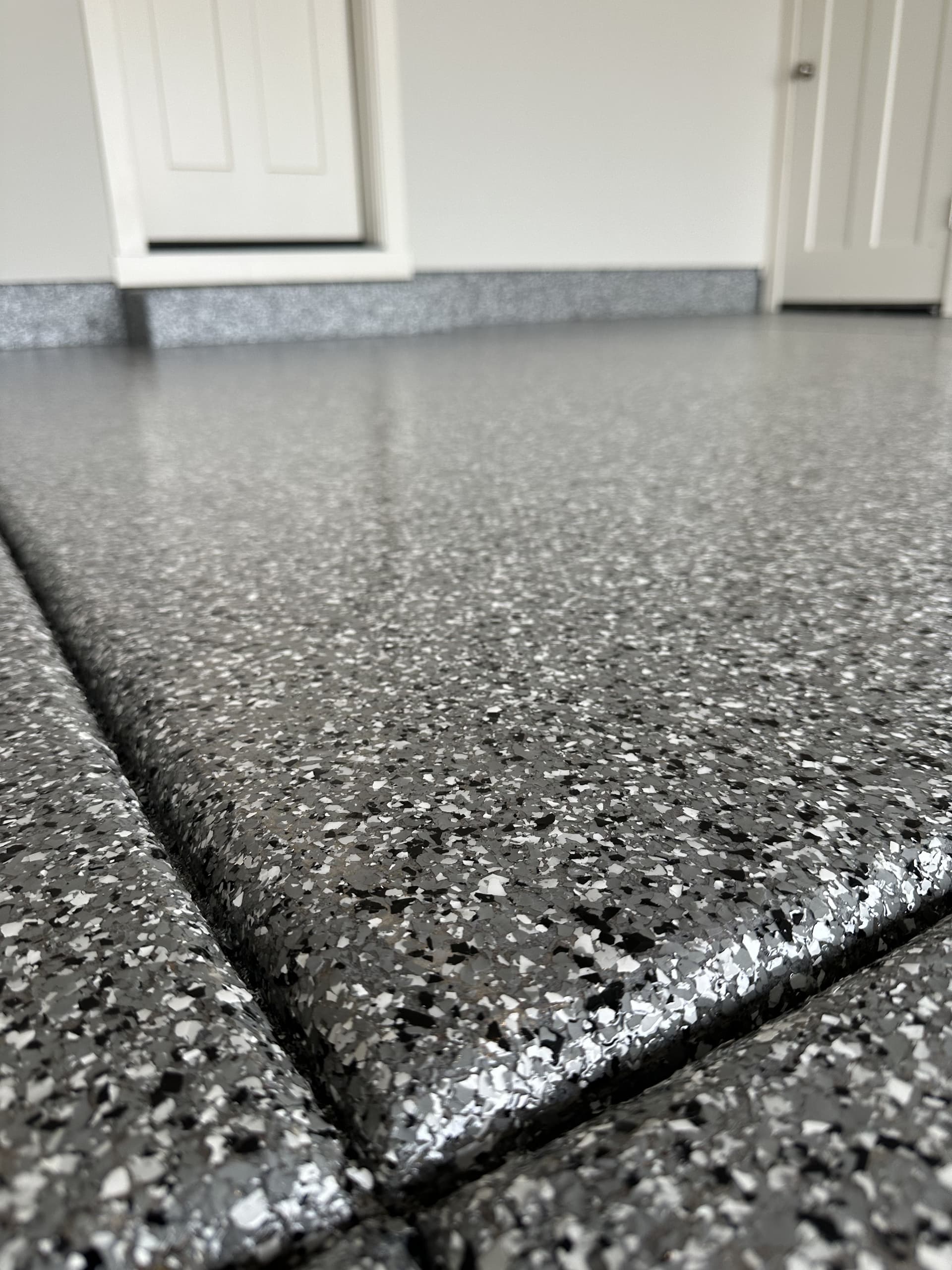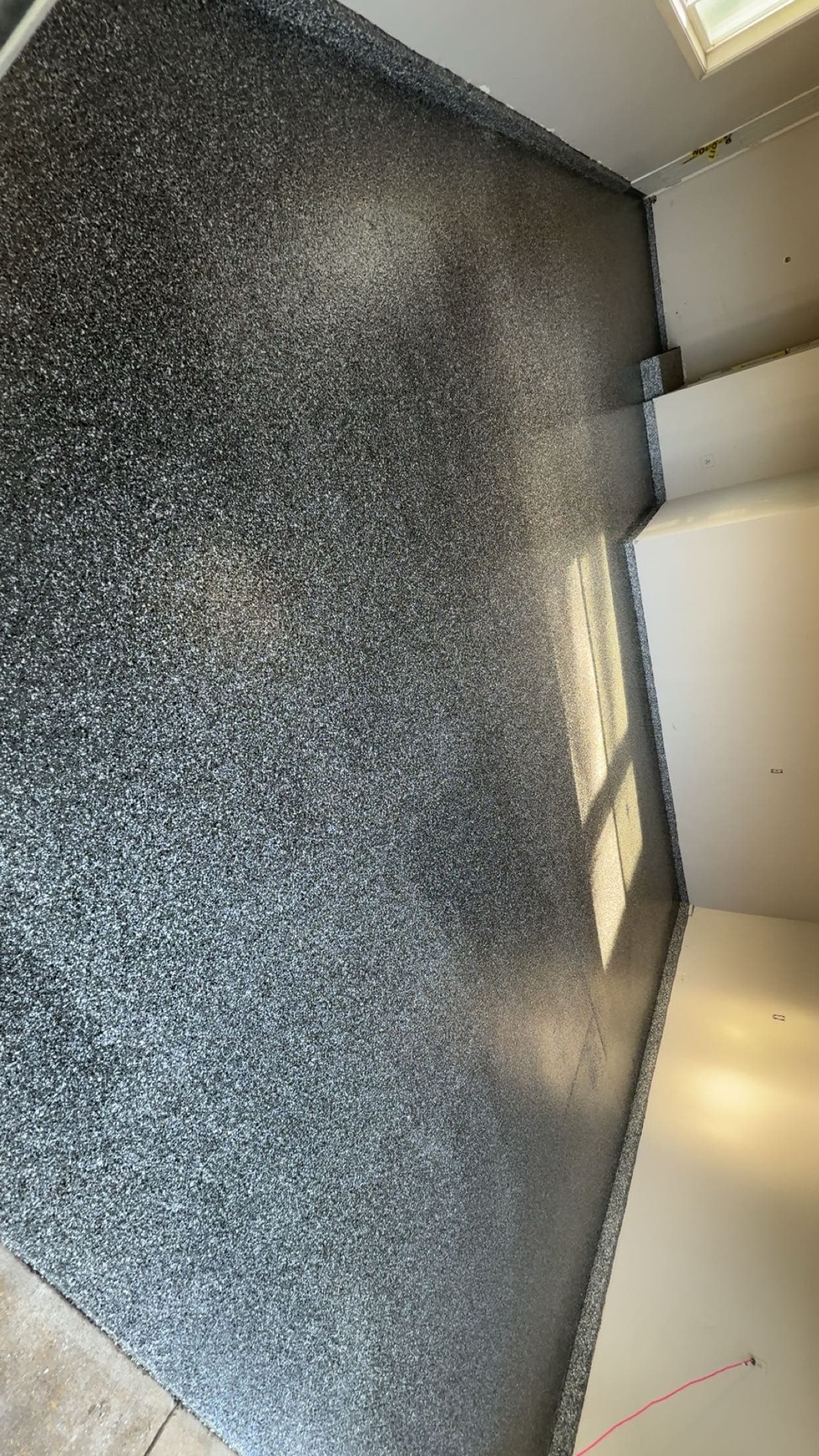
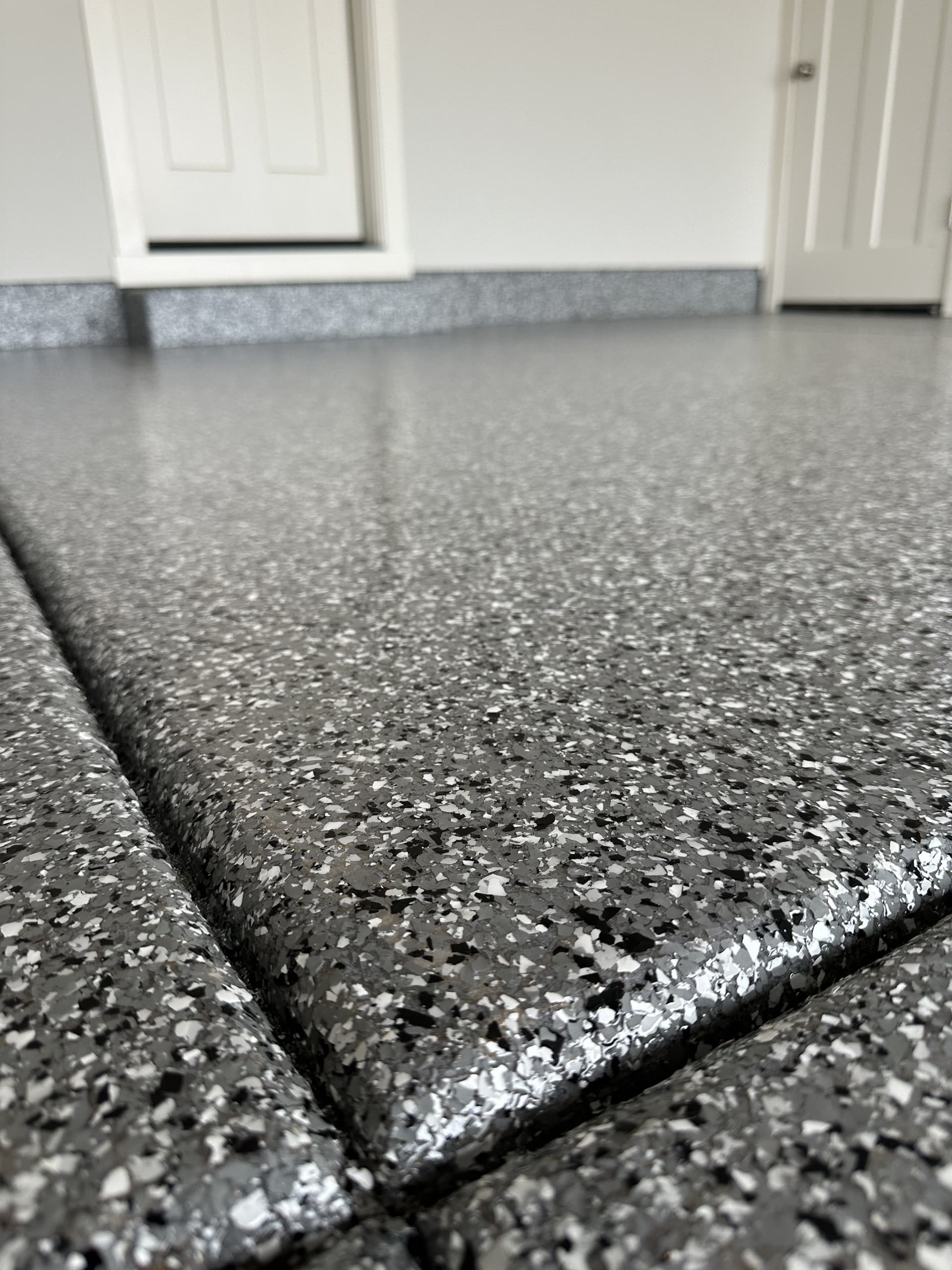
For most Oregon garages, the best coating is a professionally installed flake system: a 100% solids epoxy basecoat ground into the slab, a full broadcast of vinyl flake, and a clear polyaspartic topcoat. The epoxy gives the strongest bond to concrete. The polyaspartic top resists UV, hot tires, chemicals and abrasion. The flake hides dirt and adds grip on wet days.
The Short Answer
For most garages in Oregon, the best floor is not one product. It is a system. A 100% solids epoxy basecoat bonds to diamond ground concrete. A full broadcast of vinyl flake goes into that basecoat. A clear polyaspartic topcoat seals it all in.
Each layer does one job well. Epoxy grips the slab. Flake hides wear and adds texture. Polyaspartic takes the abuse on top, and it does not yellow in sunlight. This is the stack we install in our polyaspartic flake garage floor system, and it is the one we recommend for daily drivers, shops and storage garages alike.
The rest of this guide explains why, and when a different choice makes more sense.
What Makes a Garage Coating the Best
Best is not about shine on day one. A good garage floor has to do five things for many years:
- Stay bonded to the concrete, even with moisture coming up from below.
- Resist hot tire pickup, where warm tires grab the coating and pull it loose.
- Shrug off oil, gas, antifreeze, brake fluid and road de-icer.
- Hold its color near the door, where UV light hits the floor.
- Stay safe and easy to clean when wet.
Garage Floor Coating Types Compared
Here is how the common options stack up on the factors that decide how long a garage floor lasts. Ratings assume a correct install for each product.
| Coating Type | Durability | Cure Time to Park | UV Stability | Moisture Tolerance |
|---|---|---|---|---|
| Garage floor paint or 1-part epoxy paint | Low, peels under hot tires | A few days | Poor | Poor |
| DIY water-based epoxy kit | Low, thin film | Several days | Poor, ambers | Poor |
| Penetrating sealer | Protects bare concrete only | About a day | Good | Good, breathable |
| 100% solids epoxy only | High bond, softer wear surface | 3 to 7 days | Poor, ambers | Fair, good with a vapor barrier primer |
| Polyaspartic only | High wear, thinner bond layer | About 24 hours | Excellent | Fair, needs a sound dry slab |
| Epoxy base, flake, polyaspartic top | Highest overall | About 24 hours | Excellent | Good, best with a vapor barrier primer where needed |
Why Paint and DIY Kits Fall Short
Garage floor paint and big-box kits are tempting because they look simple. The problem is what is underneath. Most kits rely on acid etching, which does not open the concrete enough for a strong bond. They also cure very thin, so there is little material to wear through.
In a garage, that shows up fast. Hot tires lift patches in the parking spots. Road grime and grit scratch through the film. Peeling often starts within the first few years, and the old coating then has to be ground off before anything better can go down.
Why Epoxy Alone Is Not Enough
A 100% solids epoxy is an excellent basecoat. It soaks into a ground slab and locks on. It builds thickness. It is the right first layer.
As a top layer, it has two weak spots. Every epoxy ambers in UV light, so the first few feet inside the door turn yellow over time, even under Oregon clouds. Epoxy also needs a long cure, and it cures poorly in a cold garage. A polyaspartic topcoat solves both problems. Our guide on polyaspartic vs. epoxy garage floors covers the chemistry in detail.
Oregon Factors That Change the Answer
A coating that works in a dry climate can fail here. These local conditions shape what we install and how.
Wet winters. From fall through spring, cars bring rainwater into the garage every day. Standing water on a smooth, glossy floor is slick. A full flake broadcast gives the floor a light texture that grips when wet.
Moisture vapor. Many older Oregon slabs were poured with no vapor barrier underneath. Saturated winter soil pushes moisture up through the concrete. Seal that in with the wrong primer and the coating blisters a year or two later. We moisture test every slab first and use a vapor barrier primer when readings call for it.
Road de-icer. When roads in the valley, the Gorge or Central Oregon get treated, that de-icer rides home in wheel wells and drips onto the floor. A non-porous polyaspartic topcoat keeps it on the surface, where it rinses off, instead of soaking into bare concrete.
Hot tire pickup. Tires heat up on the drive home, then cool and contract while parked. On a weak floor, that pull lifts the coating. Diamond grinding, a well-bonded epoxy base and a tough topcoat are what prevent it.
Cold temperatures. Many Oregon garages are unheated and sit in the 40s in winter. Epoxy cures slowly in the cold and can stay soft. Polyaspartic cures across a much wider temperature range, which lets us install year-round.
Why Flake Is the Best Finish for Most Garages
Solid color floors look sharp when new, but they show every tire mark, dust patch and scuff. A multi-tone flake blend breaks up the surface, so everyday dirt blends in.
Full broadcast flake also adds thickness and light texture across the whole floor. That means better grip on rainy days and more material to wear through in the traffic lanes.
When a Different Choice Makes Sense
The flake system is the right answer for most garages, but not all of them.
- Detached shop or exterior slab you want to look like concrete: a penetrating sealer may be enough.
- Show garage or finished interior space: a metallic epoxy floor gives a smooth, high-gloss look.
- Commercial bays with forklifts or heavy chemicals: a heavier industrial build with anti-slip texture.
- Slab with active leaks or very high moisture: fix the water problem first, then coat over a vapor barrier primer.
How to Judge a Garage Floor Bid
Two quotes for a flake floor can describe very different products. Ask each contractor these questions:
- 1Do you diamond grind, or acid etch?
- 2Do you moisture test the slab before choosing a primer?
- 3Is the basecoat 100% solids epoxy?
- 4Is the flake a full broadcast or a partial scatter?
- 5Is the topcoat polyaspartic or another UV-stable resin?
- 6Is the warranty in writing, and what failures does it name?
Get the Right Floor for Your Garage
We install garage floors across Oregon from our Woodburn headquarters, including Salem, Portland, Beaverton, Eugene, Corvallis and Bend. Every estimate includes square footage measurement and a concrete moisture test, so the system matches your slab. Request a free onsite assessment or call (971) 444-3181.