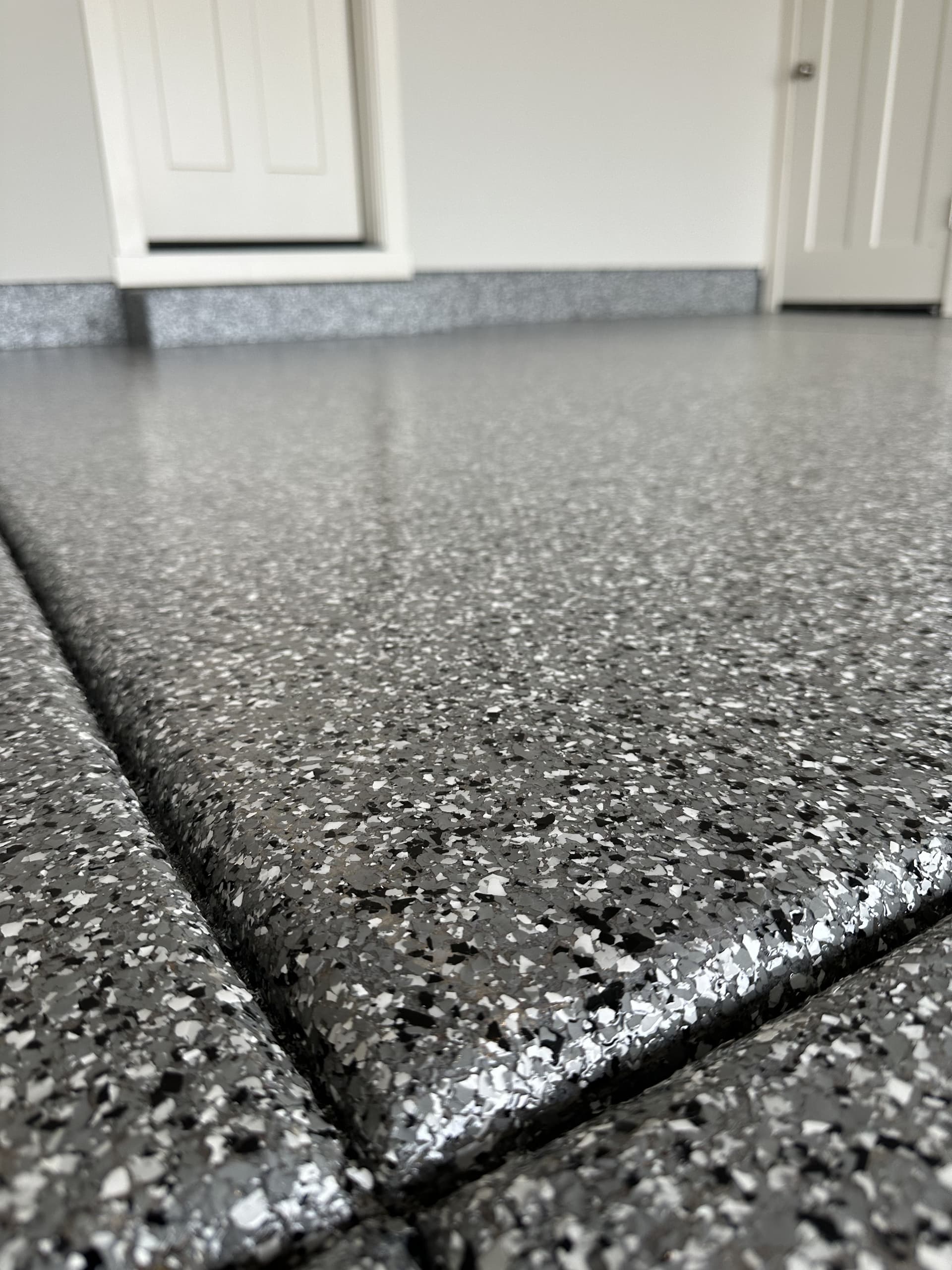
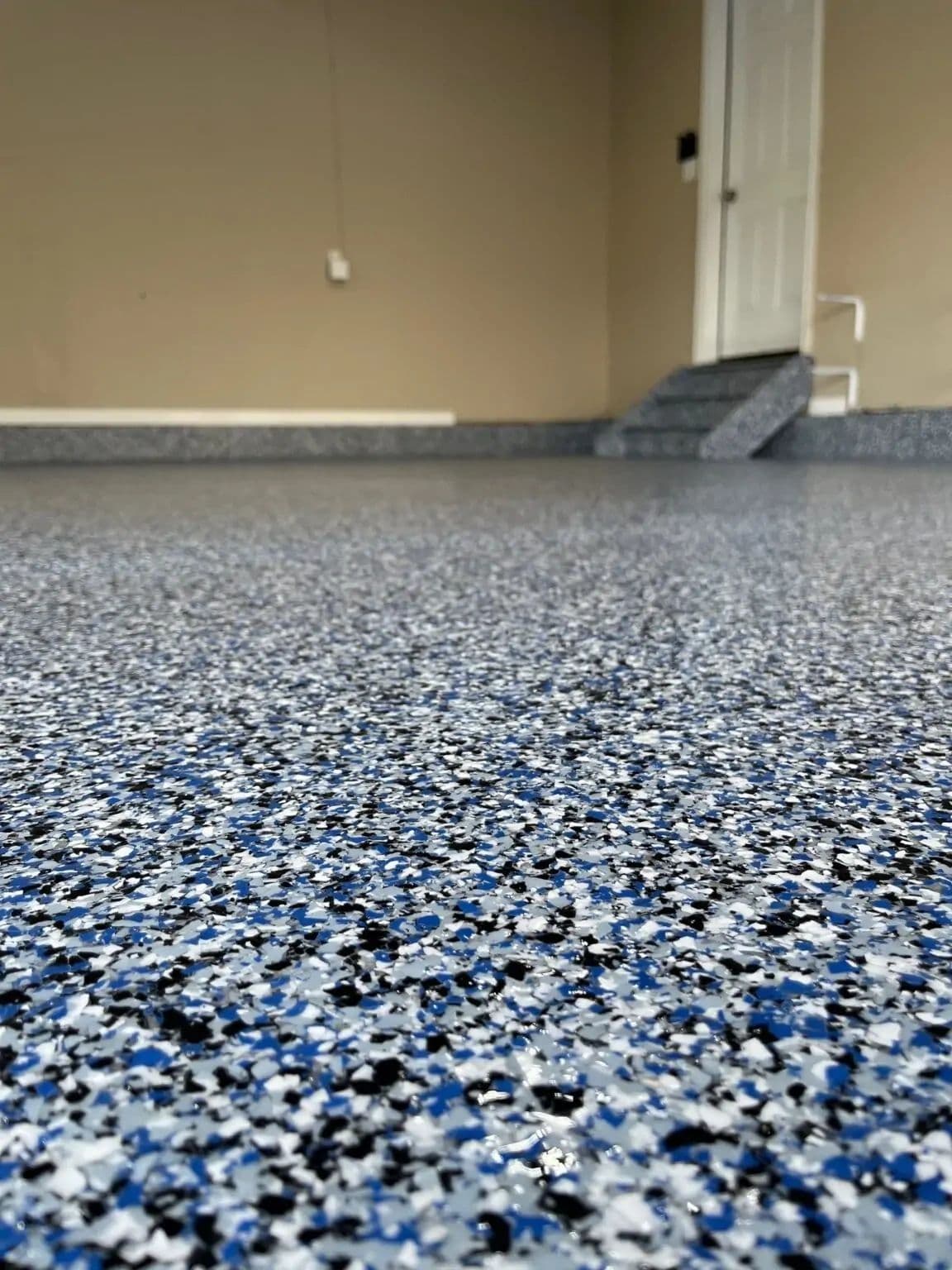
Dust mop or sweep weekly, then wash with warm water and a pH-neutral cleaner using a soft mop and squeegee dry. Wipe oil and chemical spills promptly. Avoid soap-based cleaners, vinegar, citrus and other acidic products, and abrasive pads.
The Weekly Routine
- 1Dust mop or sweep with a soft broom to pick up grit. Grit is what scratches a topcoat.
- 2Mix warm water with a small amount of pH-neutral floor cleaner.
- 3Mop with a microfiber or foam mop.
- 4Squeegee the floor dry toward the door or a drain so no residue dries on the surface.
What Never to Use
These are the most common reasons a coated floor starts looking cloudy or dull:
- Soap-based cleaners, which leave a film that builds up and looks hazy
- Vinegar, citrus or other acidic cleaners, which can etch the topcoat over time
- Steel wool, scouring pads and stiff wire brushes
- Harsh solvents unless you are spot-treating a specific stain
Spills and Stains
Oil, brake fluid, antifreeze and gas sit on top of a sealed coating, so the key is not letting them sit for days. Blot fresh spills with a rag or absorbent, then wash the spot with your normal cleaner.
For tire marks, use a degreaser approved for coated floors and a soft deck brush. Rinse well.
Winter in Oregon
Road de-icers and wet grit tracked in from the car are the biggest winter threats. Rinse or squeegee the area where you park every week or two through the wet season, and put a drip mat under the car if you drive on treated roads.
When It Is Time for a Refresh
After many years of use, the clear topcoat can wear in traffic lanes. If the basecoat is still sound, a light sanding and a fresh topcoat restores the finish without replacing the floor. Learn more in our guide on how long epoxy flooring lasts, or ask us to take a look.