Epoxy works well in basements when the slab is moisture tested first and a vapor barrier primer is used where readings call for it. Coating over active leaks or high moisture without that primer is the number one reason basement floors blister and peel.
Why Basements Are Different
A garage slab mostly fights what happens on top of it. A basement slab also fights what comes up from underneath. Below grade, groundwater and damp soil push moisture vapor up through the concrete, especially in a Willamette Valley winter when the soil stays saturated for months.
That vapor pressure is invisible. A slab can look and feel dry and still push enough moisture to lift a coating off within a year or two.
Signs of a Moisture Problem
Look for these before anything gets coated:
- White, powdery deposits on the concrete (efflorescence)
- Dark damp patches that come and go with the weather
- Musty smells or condensation on the slab
- Old paint or coatings that are bubbling or flaking
- Water coming in at the wall joint after heavy rain
Test, Do Not Guess
The industry has two standard moisture tests. ASTM F2170 places relative humidity probes into the slab. ASTM F1869 measures the moisture vapor emission rate at the surface. Either one tells us whether a standard primer is enough or whether the slab needs a vapor barrier primer.
A plastic sheet taped to the floor overnight can hint at a problem, but it is not a substitute for a real test.
How a Basement Floor Gets Done Right
- 1Fix active water first. Gutters, grading, drain tile or sump issues must be solved before coating. No coating stops a leak.
- 2Moisture test the slab.
- 3Diamond grind to open the surface so the primer can bond.
- 4Repair cracks and fill pitting.
- 5Apply a moisture-mitigating vapor barrier primer where readings require it.
- 6Install the basecoat and finish, then a durable topcoat.
Best Finishes for a Basement
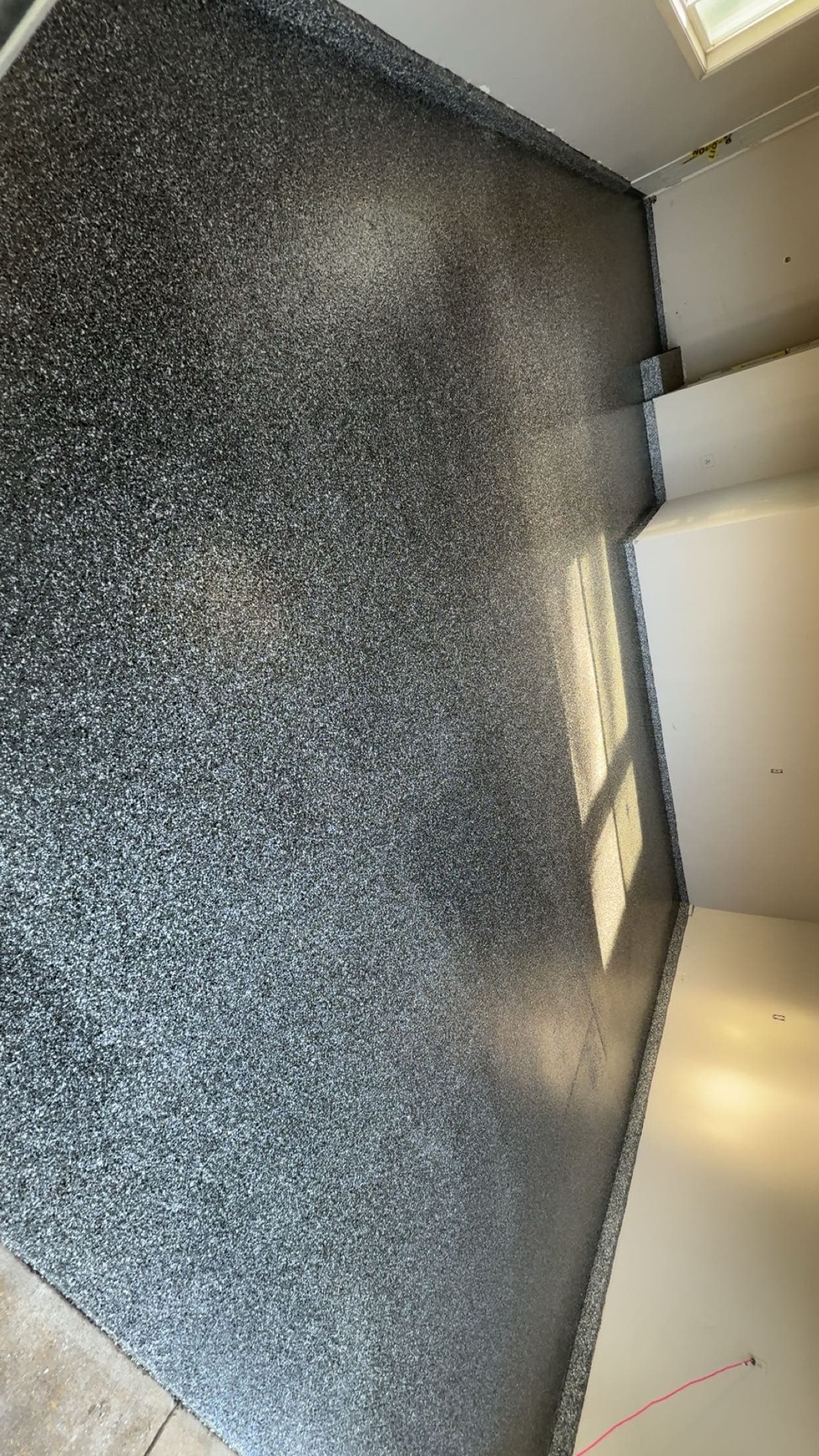
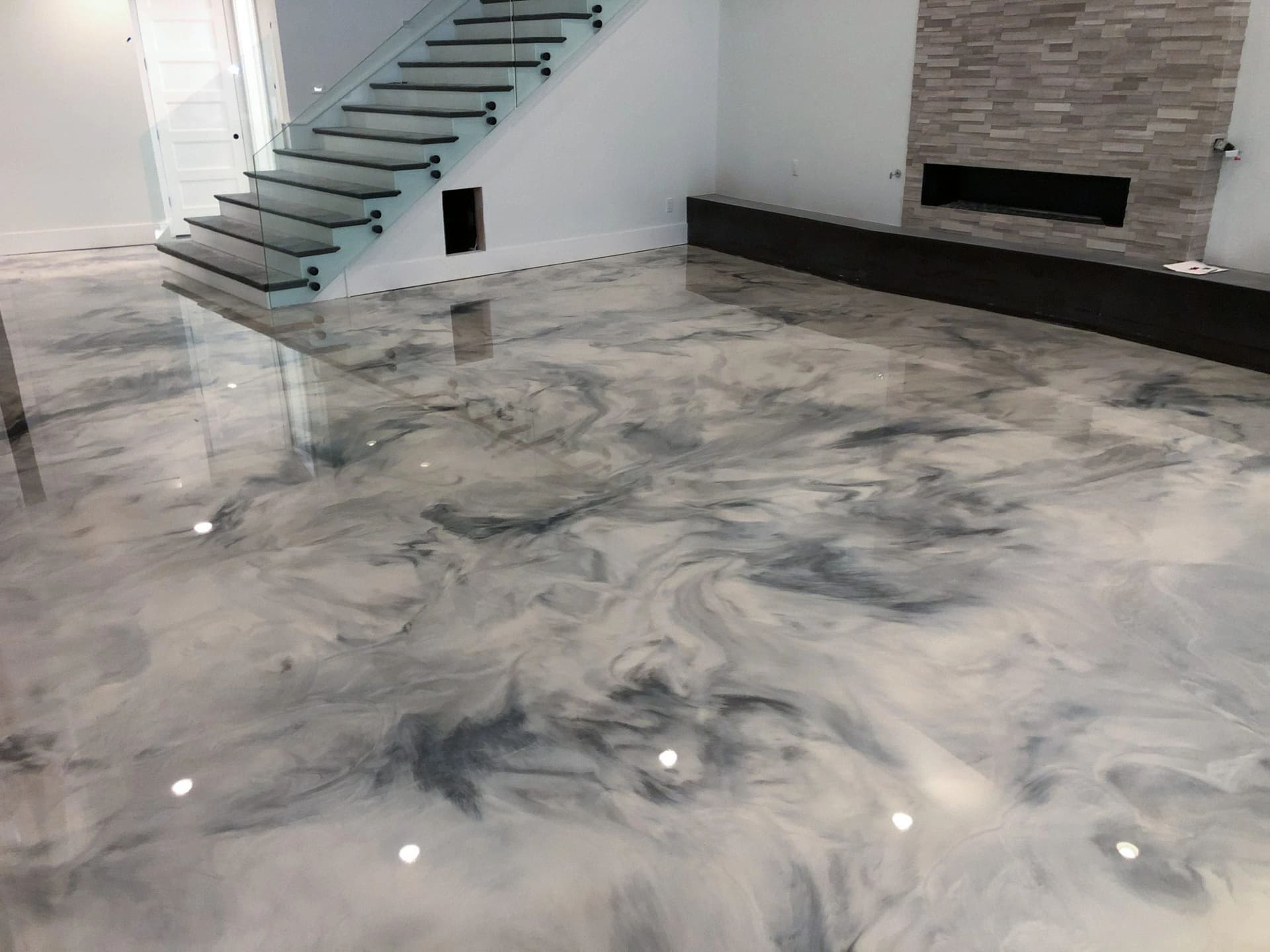
Flake floors hide dust and wear and add grip, which suits laundry rooms, storage and workshop spaces. Metallic epoxy creates a polished, finished look for rec rooms, home gyms and theaters. See examples in our metallic floor gallery and color catalog.
Basements are enclosed, so we use low-odor, 100% solids systems and ventilate during the install.
Get Your Basement Tested
Every FlowSeal estimate includes a concrete moisture test, so you know before you commit whether your basement needs a vapor barrier primer. Schedule a free onsite assessment or call (971) 444-3181.