A sealer protects bare concrete from water, salts and dusting while leaving it looking like concrete. A coating is a thick resin floor that covers the concrete completely. Exterior slabs and driveways usually want a penetrating sealer. Garages and shops that see oil, hot tires and heavy use usually want a coating.
Two Different Jobs
People use sealer and coating interchangeably, and that causes a lot of bad purchases. A sealer either soaks into the concrete or leaves a thin film on top. A coating is a built-up resin system, many times thicker, that becomes the new wear surface.
The right answer depends on what the slab has to survive, not on which product sounds better.
The Three Kinds of Concrete Sealer
- Penetrating sealers (silane, siloxane, silicate): soak into the pores and react below the surface. They repel water and de-icing salts without changing the look or making the surface slick. They are the standard choice for driveways, patios and walkways.
- Acrylic sealers: form a thin film on top that adds a wet look or sheen. They are easy to apply but wear quickly under tires and foot traffic and need to be recoated often.
- Polyurethane and epoxy sealers: thin clear films that are tougher than acrylic. They are still a fraction of the thickness of a real coating system.
What a Coating Adds
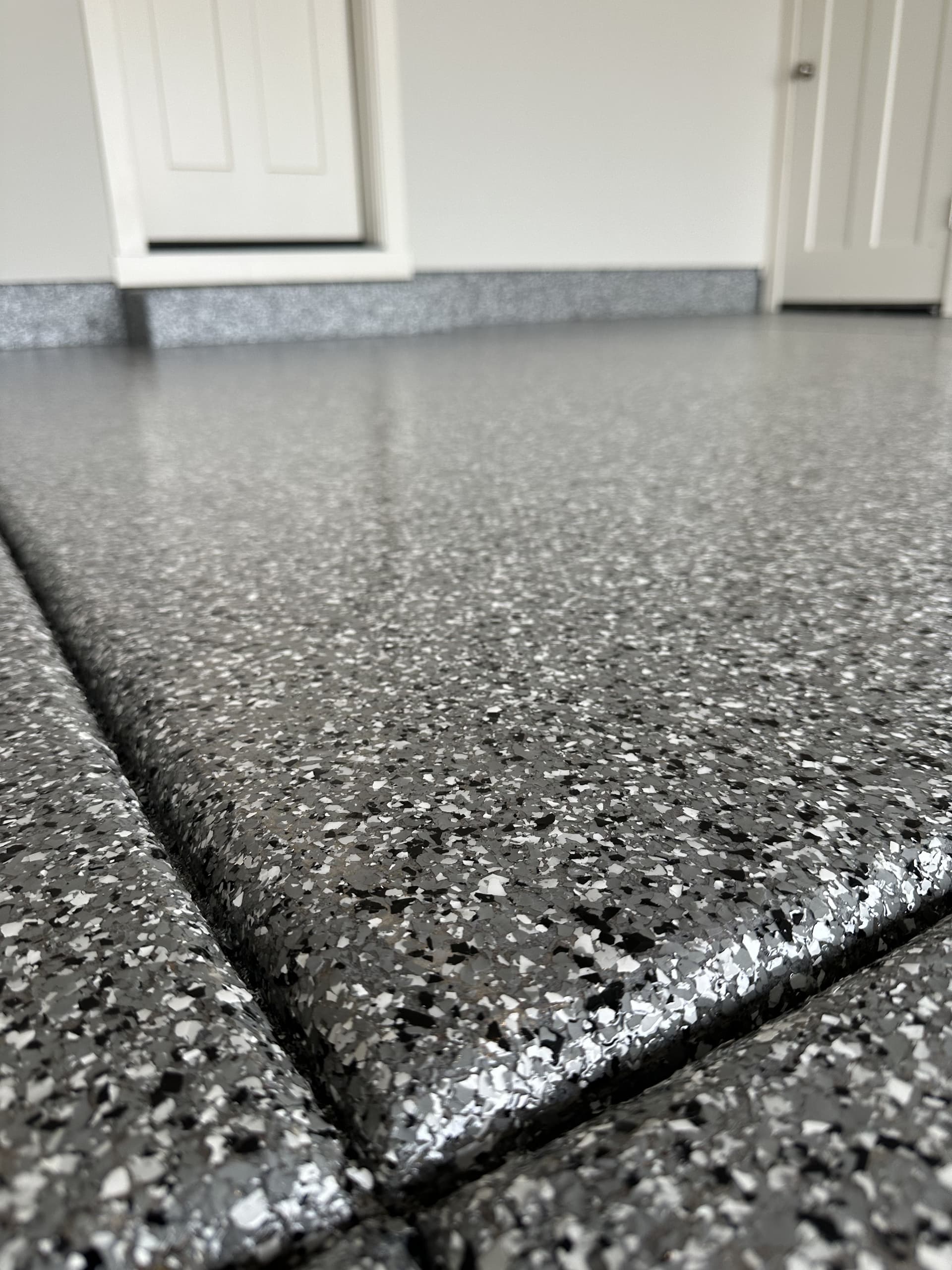
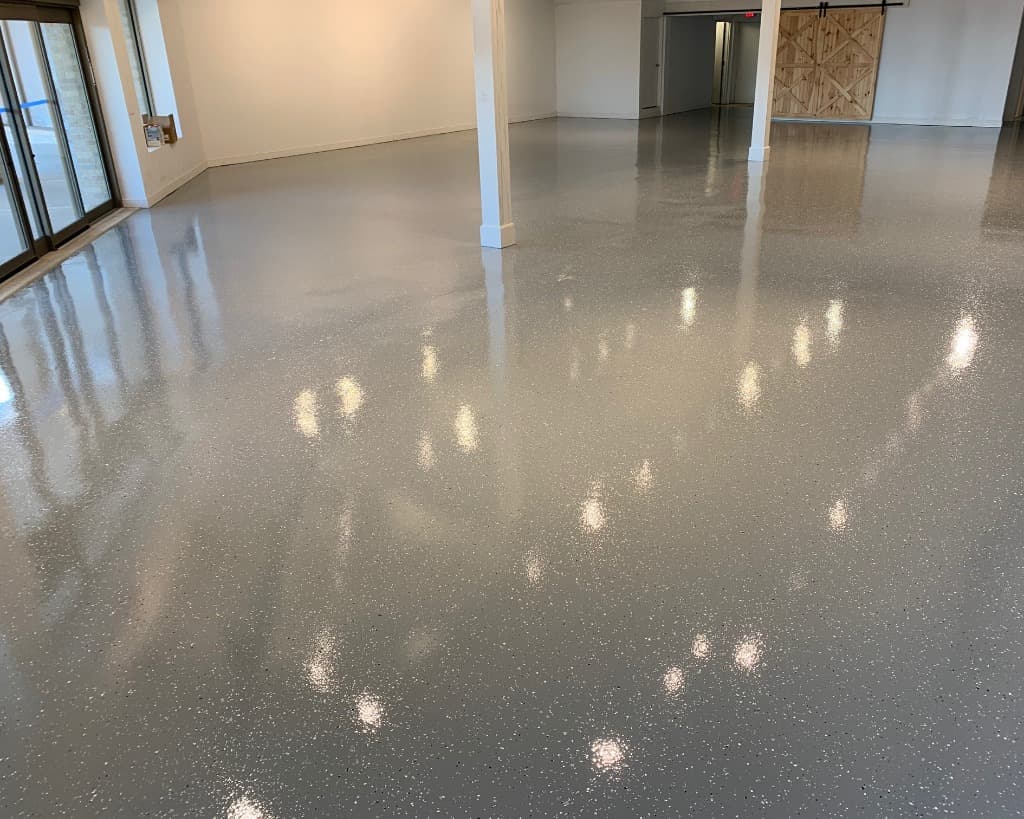
A professional coating system is ground into a mechanical profile, primed, built up with a basecoat and usually a flake broadcast, then sealed with a UV-stable topcoat. The result is a seamless, non-porous floor that oil, brake fluid and road salt sit on top of instead of soaking into.
Because it is many times thicker than a sealer, it also hides stains, spalling and minor surface wear that a clear sealer would leave visible. You can see the full layer stack in our flake floor system.
Side-by-Side
| Penetrating Sealer | Topical Sealer | Coating System | |
|---|---|---|---|
| Look | Natural concrete | Natural, with sheen | Fully covered, color or flake |
| Protects against | Water, salts, freeze-thaw | Dusting, light stains | Oil, chemicals, hot tires, abrasion |
| Typical life | Many years | Short, needs recoating | Long, with topcoat refresh |
| Best for | Driveways, patios, walkways | Decorative interior slabs | Garages, shops, basements, commercial |
One Thing to Know Before You Seal
A coating cannot bond to a slab that has already been sealed. The sealer has to be ground off first. If you think you may want a coated garage floor down the road, skip the topical sealer now. It saves an extra step later.
Not Sure Which One You Need?
We test moisture, check the existing surface for old sealers and recommend the right system for how you use the space. Request a free onsite assessment or call (971) 444-3181.